
Summarize the Content of the Blog





1. Why healthcare Splunk deployments are different
Splunk for healthcare is not Splunk for healthcare-the-vertical-tag. The deployment patterns, data sources, regulatory framework, and risk profile are different enough that partner selection criteria diverge from generic enterprise Splunk engagements.
Three structural differences drive the divergence. Data source heterogeneity. A typical US hospital system ingests audit logs from Epic or Cerner, HL7 transactional traffic between clinical applications, network telemetry from medical device fleets (often running outdated firmware), endpoint logs from clinician workstations, identity and access management logs from privilege management tools like Imprivata, and IT operations telemetry from clinical application infrastructure. The Splunk Lantern healthcare documentation covers patterns specifically for HL7 monitoring, EHR audit log analysis, and HIPAA security controls. Each data source needs healthcare-aware field extraction and use case design.
Regulatory framework. The HIPAA Security Rule mandates access controls, audit controls, integrity controls, authentication controls, and transmission security for electronic protected health information (ePHI). Splunk deployments in HIPAA-covered entities must be configured to meet each control area. The Splunk Lantern HIPAA documentation describes the searches and dashboards needed for HIPAA technical safeguards. A partner without specific HIPAA Splunk experience is at a meaningful learning curve before becoming productive.
Risk profile. A retail Splunk environment that misses an anomalous access pattern produces a chargeback investigation. A healthcare Splunk environment that misses an anomalous EHR access pattern produces a breach notification, a regulatory investigation, and patient harm exposure. The cost of underperforming Splunk monitoring in healthcare is structurally higher than in most other verticals.
2. The five healthcare-specific Splunk use cases
Most US healthcare Splunk deployments cover some combination of the following five use cases.
EHR audit monitoring. Cerner and Epic generate detailed audit logs of clinical user access, patient record views, modifications, and authentication events. Splunk-based monitoring identifies anomalous access patterns (a clinician accessing a record outside their patient panel, a record viewed by an unusually high number of distinct users, a record modified at an unusual time). The Splunk Lantern documentation describes the patterns for monitoring medical record numbers for anomalous access.
HL7 transaction monitoring. HL7 is the standard messaging protocol for clinical data exchange between systems. Splunk-based HL7 monitoring tracks message volume, latency, transaction failures, and security anomalies in the inter-system messaging fabric. The use case feeds both IT operations dashboards and security monitoring.
Medical device security. Connected medical devices often run firmware that cannot be patched on standard IT cycles. Splunk-based network telemetry monitoring identifies anomalous device communication patterns, command-and-control beaconing from compromised devices, and lateral movement attempts originating from device networks. The use case typically combines bitsIO’s OT cybersecurity solution approach with healthcare-specific device profiles.
Privileged access monitoring. Healthcare environments rely heavily on privileged access management for clinician single sign-on, break-glass access during emergencies, and administrative access to clinical systems. Splunk-based monitoring of identity provider logs, privileged session recordings, and IAM event streams covers HIPAA access control requirements.
Clinical application uptime. Splunk ITSI is commonly deployed in healthcare environments to monitor clinical application service health (EHR, lab systems, imaging, patient portals). A clinical application outage during business hours has direct patient care impact. ITSI service decomposition for healthcare applications is its own design discipline.
3. What HIPAA actually requires of a Splunk environment
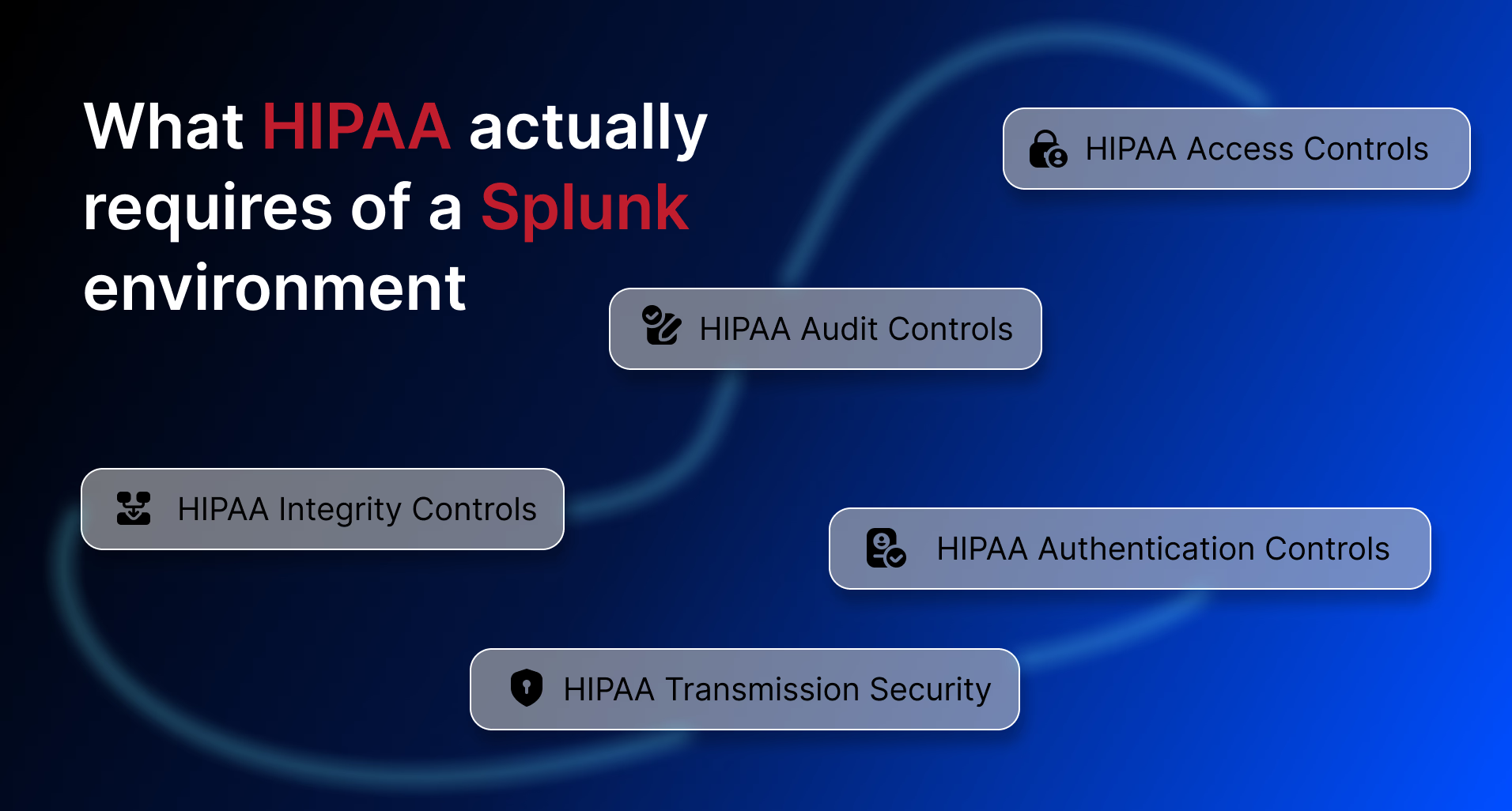
The Splunk Lantern HIPAA documentation enumerates the technical safeguards a Splunk deployment supports.
HIPAA Access Controls. Splunk-based monitoring of authentication events, failed login patterns, and access to ePHI repositories. The use case ensures the deployment can identify unauthorized access attempts and produce the audit trail HIPAA requires.
HIPAA Audit Controls. Comprehensive audit logging of access to and modification of ePHI. Splunk audit-log analysis identifies who accessed which record, when, and what activities were performed. The Splunk Lantern documentation provides reference searches against Cerner audit logs.
HIPAA Integrity Controls. Monitoring for unauthorized modification or destruction of ePHI. Splunk searches identify users with anomalously high record modification rates, modifications to records outside the user’s normal patient panel, and bulk modifications consistent with data exfiltration.
HIPAA Authentication Controls. Monitoring of identity provider authentication events to verify that only authenticated users access ePHI. Splunk-based correlation across identity provider logs, application authentication events, and session activity covers the authentication control area.
HIPAA Transmission Security. Monitoring server and email logs to detect ePHI transmitted over unsecured channels. The use case requires Splunk App for Stream or equivalent network data parsing.
A Splunk deployment that covers all five control areas is the practical implementation of the HIPAA Security Rule’s technical safeguards. The healthcare-experienced Splunk Professional Services Partner brings the use case templates, the dashboard designs, and the audit-trail evidence templates needed for HIPAA assessment readiness.
For organizations also working with Splunk Cloud in healthcare contexts, the Splunk Cloud Business Associate Agreement (BAA) is the foundational contract layer. Customer success references like Imprivata describe how Splunk Cloud’s BAA supports HIPAA, SOC 2 Type II, and GDPR alignment.
4. How to evaluate a Splunk partner for a healthcare deployment
Six evaluation criteria specifically matter for healthcare engagements.
Healthcare reference customers. The partner publishes or can share named healthcare reference customers with deployments comparable in size and scope. A partner whose healthcare evidence is limited to one engagement five years ago is at a different point on the learning curve than one with active healthcare customers in the current quarter.
HIPAA-specific Splunk experience. The partner has delivered against all five HIPAA control areas (access, audit, integrity, authentication, transmission) and can describe the dashboards, searches, and reports they typically deploy.
Cerner, Epic, or vendor-specific EHR audit log experience. The partner has built field extractions, dashboards, and use cases for the specific EHR systems running in the target environment.
HL7 and clinical messaging experience. The partner can describe specific HL7 monitoring patterns they have implemented and the operational outcomes (latency tracking, transaction failure detection, security monitoring).
Medical device security understanding. The partner can articulate the OT-IT convergence challenges in healthcare device networks and the Splunk patterns that address them.
Splunk Elite partner tier. Elite tier is the baseline. Splunk Elite Partner status reflects multi-year delivery quality and is a minimum bar for healthcare engagements where the cost of partner underperformance is high.
5. The US Splunk Professional Services Partner landscape for healthcare
Several US Splunk Professional Services Partners maintain healthcare practices. The choice typically narrows to partners with current Splunk Elite tier, demonstrated healthcare reference work, and HIPAA-specific Splunk delivery patterns. The verified-credentials shortlist for 2026 typically includes:
- bitsIO, a Splunk Elite Partner since 2018 and four-time Splunk Partner of the Year, with published healthcare datasensAI case study work and a healthcare-specific use case page.
- TekStream, a Splunk Elite MSP and Services Partner with healthcare engagement evidence in published case studies.
- SP6, a Splunk Elite Partner with concentrated cybersecurity and compliance practice that intersects HIPAA security controls.
- Hurricane Labs, a Splunk MSSP with HIPAA-aware managed security delivery.
- Kinney Group, a Splunk Elite Partner whose Atlas accelerator suite includes healthcare use case templates.
- Discovered Intelligence, a North America Splunk PS Practice Partner with healthcare project references.
The Top 10 Splunk Professional Services Partners in the United States (2026) covers the broader US partner landscape. The healthcare shortlist above narrows that broader list to partners with credible healthcare evidence in 2026.
6. bitsIO’s healthcare engagement model
bitsIO has delivered Splunk professional services in US healthcare environments across EHR audit monitoring, clinical application ITSI, medical device security, and HIPAA Security Rule controls. The published healthcare datasensAI case study describes a deployment that surfaced 60-plus percent license recovery opportunity in a hospital system Splunk environment.
The engagement pattern typically opens with a HIPAA-aligned Splunk assessment. The assessment audits the current Splunk environment against the five HIPAA Security Rule control areas, identifies coverage gaps, and produces a prioritized remediation backlog. From there, engagements scope against specific outcomes: closing HIPAA control gaps, deploying clinical application ITSI, integrating medical device telemetry, or addressing license waste through datasensAI.
bitsIO’s engagement model for healthcare includes named consultants with healthcare-vertical Splunk experience, Cerner and Epic audit log field extractions library, Splunk App for Stream configuration patterns for HL7 monitoring, and ITSI service decomposition templates for clinical applications. For a broader view of the bitsIO Splunk Professional Services approach, see the Splunk Professional Services Partner USA 2026 guide.
7. Questions to ask any partner before a healthcare engagement
Eight questions specifically calibrated for healthcare Splunk evaluations.
- How many active US healthcare customers do you have, and what are the deployment patterns?
- Which EHR systems have you delivered Splunk audit log monitoring for (Epic, Cerner, MEDITECH, Allscripts, athenahealth)?
- What HIPAA Security Rule control areas (access, audit, integrity, authentication, transmission) have your healthcare deployments covered?
- What HL7 monitoring patterns have you deployed, and what operational outcomes resulted?
- How do you handle medical device security data in a Splunk environment?
- Have you deployed Splunk ITSI for clinical application monitoring, and can you share the service decomposition approach?
- What is your Splunk Cloud BAA experience, and how do you advise healthcare customers on Splunk Cloud versus Splunk Enterprise for ePHI workloads?
- Who specifically will be on our engagement, and what is their healthcare Splunk experience?
A partner that answers all eight with specific case-based evidence is a partner worth a healthcare engagement conversation. A partner that pivots to generic Splunk capabilities is signaling something about their healthcare-vertical depth.
Frequently Asked Questions