



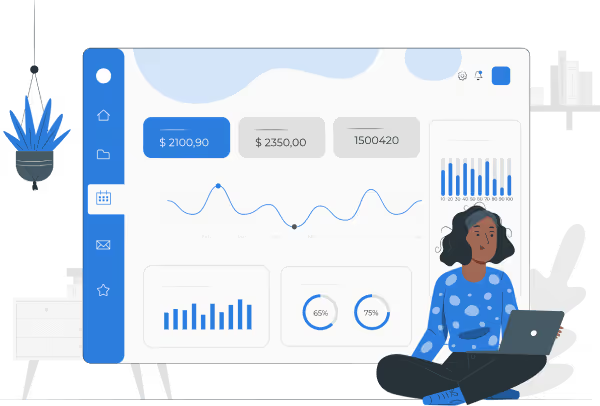
One agent cannot interfere with another. A shared dashboard shows every agent's status, cost, and activity in one place.
Agents talk through the channels your team already uses.
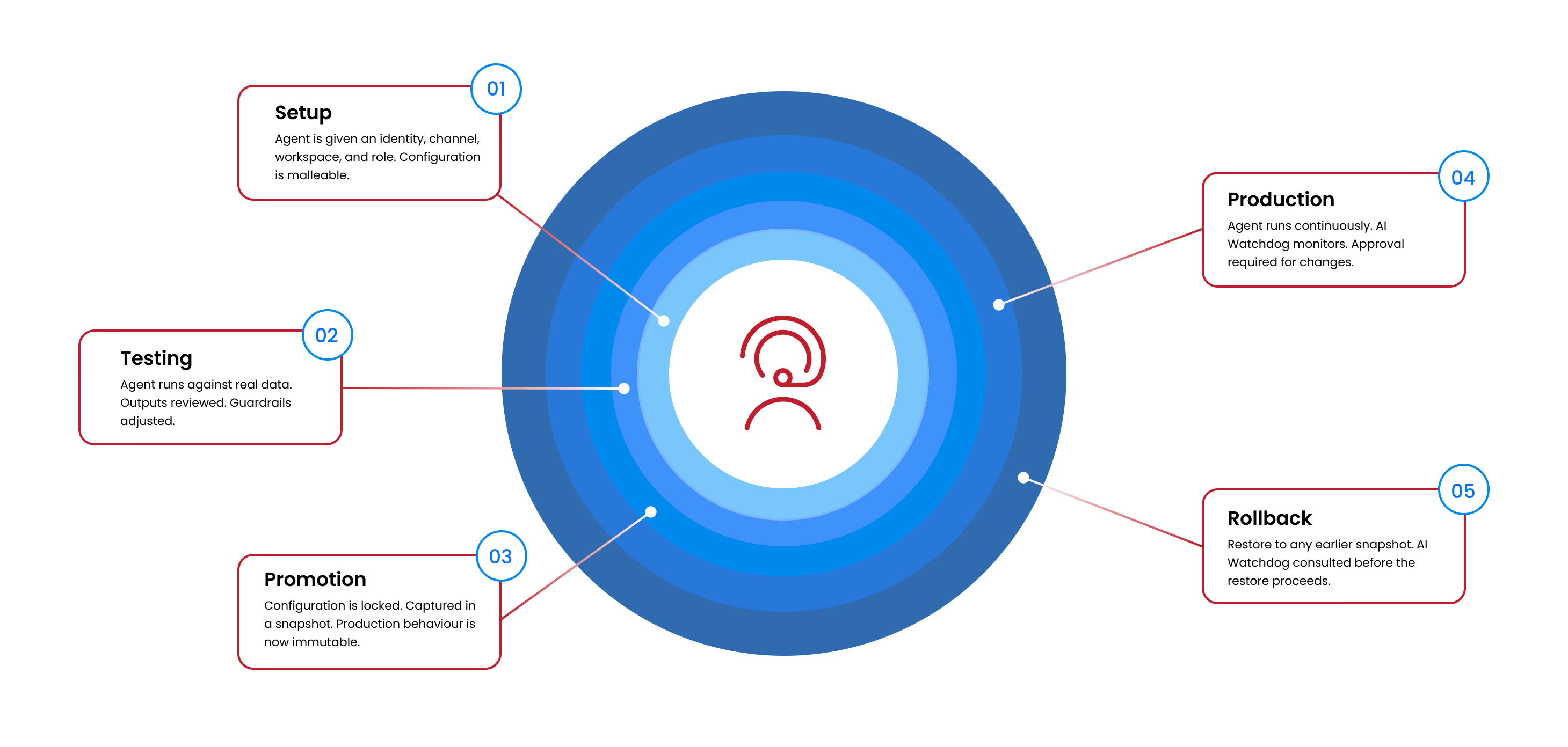
Two principles make it safe for production: configuration is malleable during setup but locks at promotion, and the
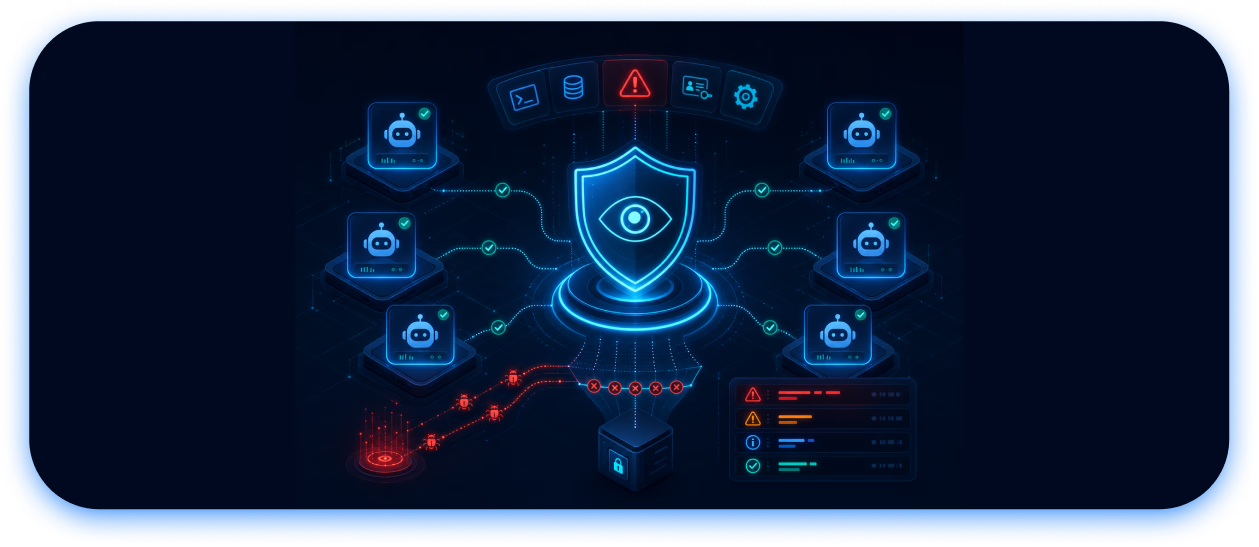
AI Watchdog runs as a separate agent that cannot be disabled by the agents it monitors.
Agents follow a deliberate lifecycle. This is the mechanism that
prevents instruction injection from changing production behaviour.
A dedicated monitoring agent that runs alongside the others. It is the only agent that cannot be disabled by the agents it monitors.
Agents evolve. They refine instructions, build skills, accumulate context about your environment. The platform protects this work.
This protects the agent's own configuration and learned state. Not your data or infrastructure.

Point-in-time backups of identity, skills, and rules. Restore is one checkpoint selection.

Optional backup of memory and conversation context. Recovered agents keep what they learned.

Operator confirmation required. AI Watchdog consulted before any restore.

Automatic scan aborts backup if credentials or tokens would be stored
A ruggedised on-prem appliance that runs agents next to the production line. Air-gap capable, optional GPU. Built for manufacturing, energy, and critical infrastructure.

An administrator approves it explicitly. After promotion, the configuration locks. Any change starts a new deployment cycle. This is by design.
Cloud-hosted or local. You choose. A model gateway handles routing, costcaps, and failover. Air-gapped deployments use local inference on GPU hardware
Splunk, Elastic, cloud data lakes (S3, ADLS, GCS), Grafana, ServiceNow, and any system with an accessible API. The platform is data-source-neutral; integration adapters are configured per agent. AI Watchdog telemetry can be streamed to any data platform you operate.
Most are built for developers prototyping. This is built for production: immutable configuration, dedicated security monitoring, audit-grade logging, backup and rollback, and deployment on infrastructure you control.

We're a team of passionate experts helping businesses like yours extract maximum value from their data investments. Whether you need to streamline data pipelines, build AI-powered solutions, or unlock advanced analytics, we have the expertise to guide you through every step.


920 South Spring St, Ste 1200, Springfield, IL, 62704




Copyright © 2026 bitsIO | All Rights Reserved.
.avif)