



As a 4x Splunk Professional Services Partner of the Year, bitsIO brings deep expertise in deploying, tuning, and managing Splunk ITSI environments. Whether you're building a new AIOps capability or optimizing an existing deployment, our team ensures you get maximum value, faster.

Flexible deployment solutions that optimize performance while meeting your specific infrastructure requirements and compliance needs.

Choose from collaborative co-management or comprehensive fully managed solutions based on your internal capabilities and strategic objectives.

Flexible engagement models from quick capability assessments to proof-of-concept validation and comprehensive long-term implementation support.


Explore how bitsIO's innovative solutions drive efficiency, enhance performance, and deliver impactful results for businesses across various sectors.
Dive into our extensive library of resources tailored to enhance your experience with Splunk and other leading technologies. Keep up with the latest industry trends, best practices, and expert insights to fuel innovation and help you reach your goals.

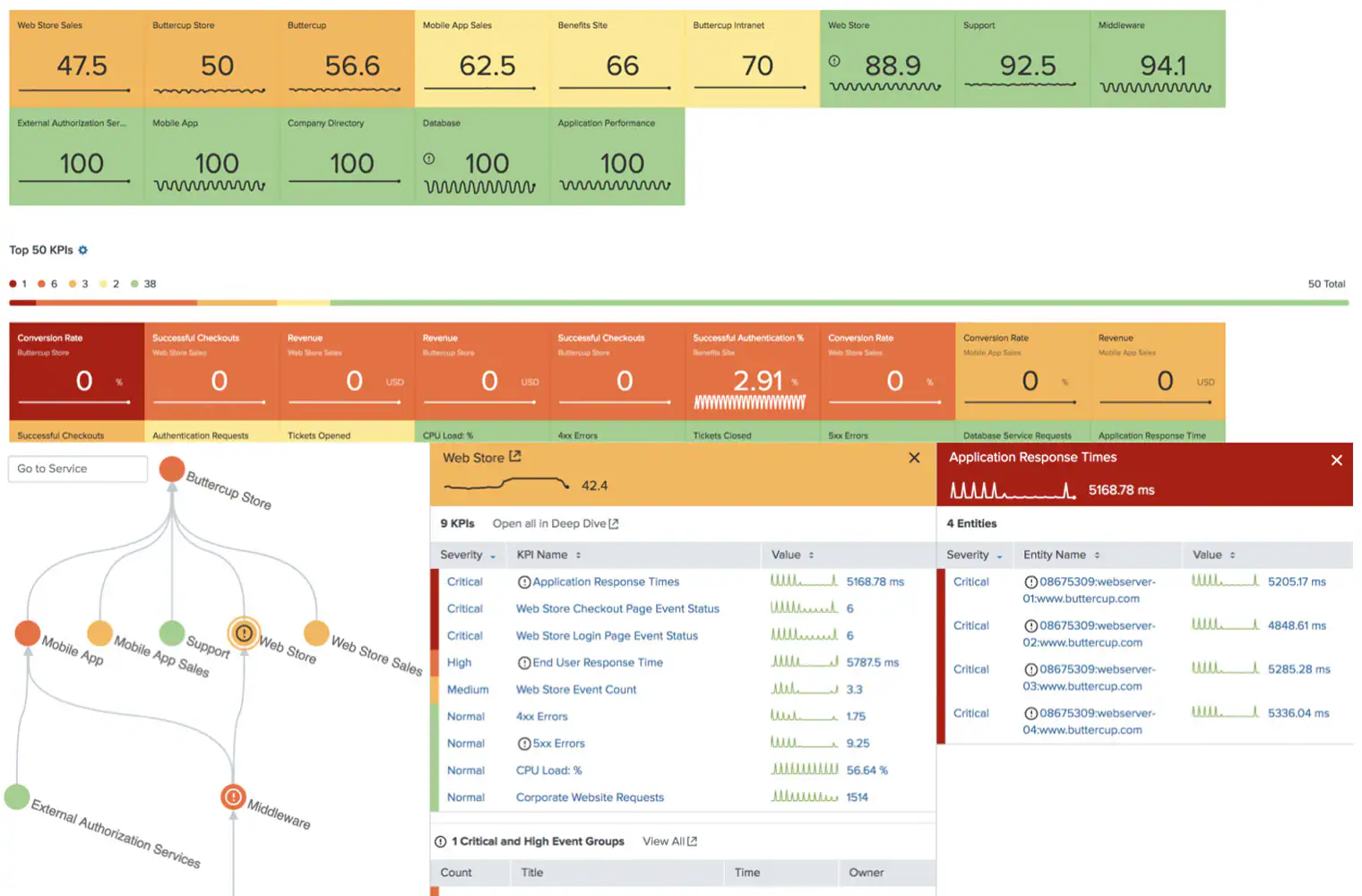
Splunk ITSI is an AIOps platform that gives a service-level view of IT operations by combining metrics, logs, and events into health scores, KPIs, and predictive alerts. It helps teams move from monitoring individual systems to monitoring business services end to end.
Based on Splunk's documented results, ITSI can reduce unplanned downtime by up to 60%, cut alert noise by more than 90%, and surface predicted service degradations roughly 30 minutes in advance. Actual results depend on data quality, service model design, and tuning effort.
bitsIO defines business-aligned services, builds health scores and KPIs, tunes episode review and predictive analytics, and integrates ITSI with ITSM and on-call tools. The team also delivers custom dashboards, runbooks, and user enablement so the deployment is actively used after go-live.
ITSI focuses on IT operations and service health, including service modeling, KPI monitoring, and predictive analytics. Splunk Enterprise Security focuses on security operations, including correlation searches, risk-based alerting, and threat detection. Many customers run both.
Yes. Splunk ITSI integrates with major ITSM platforms for ticket creation, on-call routing, and incident review, so events surfaced in ITSI can drive workflows in tools your team already uses.
Yes. Splunk ITSI runs on Splunk Enterprise (on-prem), Splunk Cloud, or hybrid deployments. bitsIO supports each model and can design the right deployment based on compliance, performance, and operational needs.
A focused ITSI rollout typically takes 6 to 16 weeks depending on the number of services modeled, data sources required, and ITSM and on-call integrations. bitsIO delivers value in phases, starting with a small set of high-priority services rather than modeling everything at once.
In Splunk ITSI, a service is a business-aligned representation of an application or workflow (for example, online banking or order processing). Each service has KPIs, health scores, and dependencies, so teams can monitor the business outcome rather than just the underlying servers and components.
ITSI uses machine learning to analyze patterns in service health scores and KPI behavior over time. It identifies trends that historically led to degradations and surfaces predicted incidents up to about 30 minutes in advance, giving teams time to investigate before customers notice impact.
Traditional monitoring tools watch individual systems and alert on thresholds. ITSI groups these signals into business service models with health scores, applies AIOps to reduce noise, and predicts degradation before it impacts customers. It is built for service-level operations, not infrastructure-only monitoring.

We're a team of passionate experts helping businesses like yours extract maximum value from their data investments. Whether you need to streamline data pipelines, build AI-powered solutions, or unlock advanced analytics, we have the expertise to guide you through every step.


920 South Spring St, Ste 1200, Springfield, IL, 62704




Copyright © 2026 bitsIO | All Rights Reserved.


.png)

