
Summarize the Content of the Blog





End-to-end Splunk onboarding means one partner owns the whole path from architecture and deployment through data onboarding, use-case development, and knowledge transfer, rather than handing you a running platform with no data in it. It is delivered by certified Splunk partners with implementation, data, and security specialists on the same team. bitsIO, a four-time Splunk Partner of the Year, delivers this across the USA.
Key takeaways
"End-to-end" is a claim worth testing. Many "setup" engagements end at a running platform, which is the halfway point, not the finish line.
The finish line is a working use case: a detection that fires, a dashboard an executive reads, an alert someone acts on. Everything before that is plumbing.
The hardest part of onboarding is not installing Splunk. It is getting data in correctly and turning it into outcomes, which needs data and security specialists, not just installers.
The best onboarding engagements build your team's capability as they go, so you are not dependent on the partner forever.
What "end-to-end" should actually mean
A lot of "Splunk setup" work stops at the wrong place. The platform is installed, the indexers are clustered, the search heads are up, and the engagement is declared complete. Technically it is a working Splunk deployment. Practically it is an empty building with the lights on.
End-to-end means the engagement does not end until Splunk is producing outcomes. One partner owns the whole path: designing the architecture, deploying it, getting your data in correctly, building the use cases that turn that data into detections and dashboards, and transferring enough knowledge that your team can run and extend what was built.
The test is simple. Ask a prospective partner what "done" looks like. If the answer describes a running platform, that is setup. If it describes a working use case, a detection that fires or a dashboard someone uses, that is end-to-end.
The five stages of a real onboarding
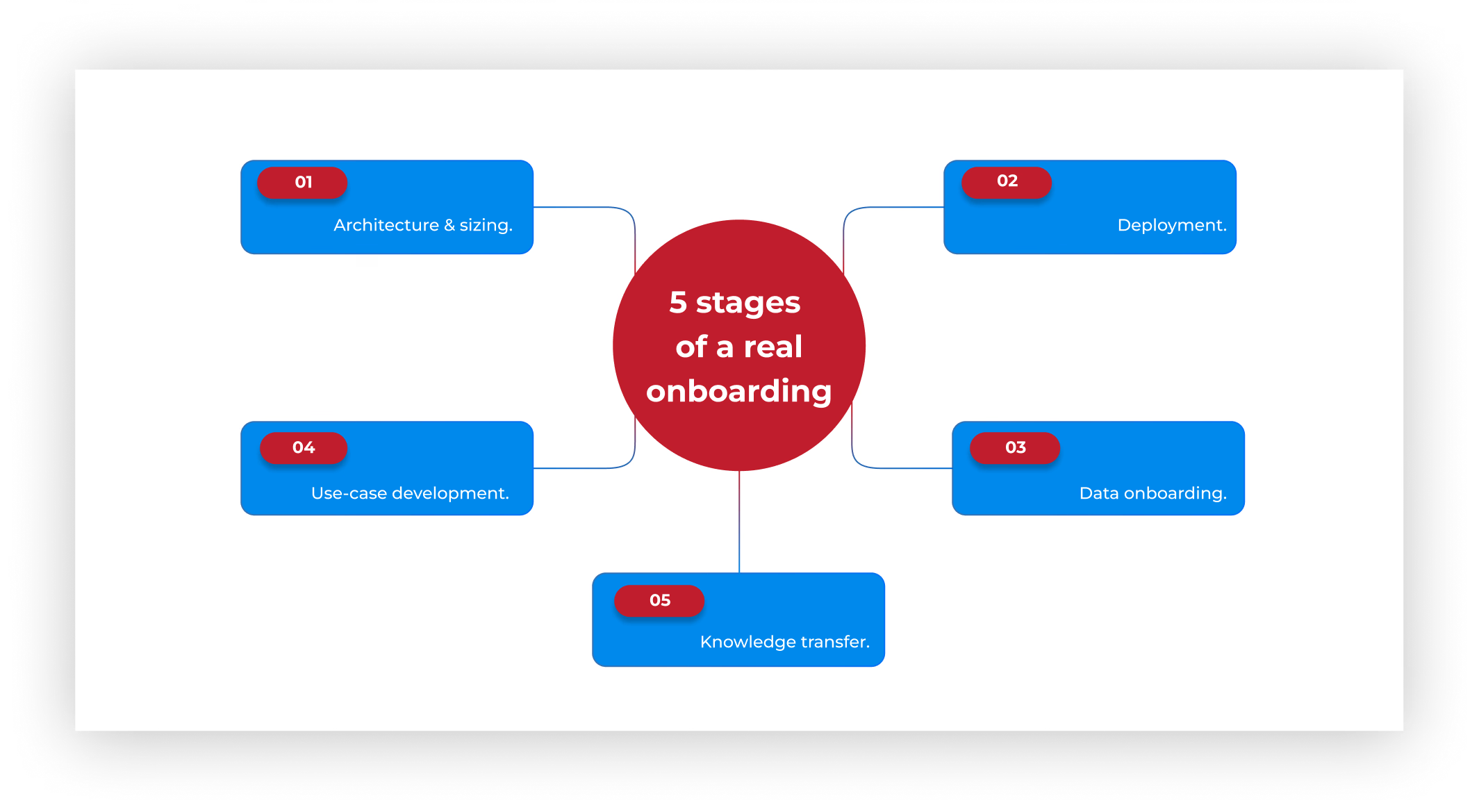
1. Architecture and sizing. What the deployment needs to be, based on your data volume, retention requirements, search patterns, and whether you are heading to Splunk Cloud or self-managed Enterprise. Getting this wrong here is expensive to fix later, so it is worth slowing down for.
2. Deployment. Standing up the environment: indexers, search heads, forwarder management, authentication, and the base configuration. This is the part most people picture when they hear "setup," and it is the most commoditized.
3. Data onboarding. Connecting the sources, configuring forwarders and collectors, and getting parsing, timestamps, and sourcetypes right so the data is usable rather than merely present. This is where onboarding engagements quietly succeed or fail, because badly onboarded data is invisible to everything downstream. The discipline behind this is covered in bitsIO's data onboarding practice and in The Complete Guide to Splunk ITSI Implementation for the service-modeling side.
4. Use-case development. Turning data into outcomes: correlation searches for security, KPIs and service models for operations, dashboards for the people who need to see something. This is the stage that justifies the whole investment, and the one that most distinguishes a real partner from an installer.
5. Knowledge transfer. Documentation, training, and enough hand-holding that your team can operate and extend the environment. An onboarding that leaves you dependent on the partner for every change was not really end-to-end.
The gap most setup engagements leave
Here is the pattern that produces disappointed Splunk buyers.
A partner runs stages 1 and 2 well. The platform is architected sensibly and deployed cleanly. Then the engagement thins out. Data onboarding gets done for the two or three obvious sources, use-case development is light or absent, and knowledge transfer is a slide deck. Six months later the organization has a well-built Splunk environment that is not producing much, and nobody can quite say why.
The why is that stages 3 to 5 are where the specialist skill lives, and they are the stages a generalist installer is least equipped for. Getting a firewall log parsed and CIM-normalized so an Enterprise Security detection fires is a different skill from clustering indexers. Building an ITSI service tree that maps to how your business actually thinks about services is a different skill again.
This is why "who offers end-to-end onboarding" is a better question than "who can set up Splunk." Plenty of people can set up Splunk. The number who can take you all the way to working outcomes is smaller, and they are the ones with data and security specialists on the same team as the platform engineers.
What to look for in a partner
- Certification depth across specialisms. Not one certified architect. A team with platform, data, and security certifications, because stages 2, 3, and 4 need different people.
- A definition of done that includes outcomes. Ask directly. The answer tells you whether they think in platforms or in results.
- Data onboarding treated as a discipline, not a checkbox. Ask how they validate that onboarded data is usable, not just present. A good answer mentions parsing, CIM, and a test that proves a detection fires.
- A knowledge-transfer plan you can see. Documentation standards, training scope, and a handover that builds your capability.
- Proof. Case studies where the outcome, not the install, is the story. bitsIO's are worth reading rather than taking on trust, for example Enhancing threat detection with Splunk ES.
How bitsIO runs end-to-end onboarding
bitsIO is a four-time Splunk Partner of the Year and a Splunk Elite Partner, with 300+ enterprise clients and 50+ Splunk certifications across the team. The certification spread is the point: platform, data, and security specialists work the stages they are best at, rather than one generalist stretching across all five.
An engagement runs the five stages above, with two commitments that address the usual gap. First, data onboarding is validated to outcomes, meaning the engagement is not done when data arrives but when the detection or dashboard that depends on it works. Second, knowledge transfer is scoped up front, so your team leaves able to run and extend what was built.
Where the onboarding includes a cost or utilization question, bitsIO uses datasensAI, which scores data by utilization using its algorithm, produces ROI and cost analysis, and generates 10 to 15 MITRE ATT&CK-aligned use-case recommendations. That last capability is especially useful during use-case development, because it turns "what should we detect" into a ranked, framework-aligned list. The datasensAI ROI calculator models the cost side.
Onboarding sits within bitsIO's Splunk professional services, and the certified engineers who deliver it are described in Splunk Certified Experts. Once the environment is live and producing outcomes, ongoing operation is covered by Splunk managed services.
Frequently asked questions